
Executive Communications
FY25 Annual Report
The FY25 Annual Report was designed to communicate RAINN's annual accomplishments through a modern editorial experience that balances powerful storytelling, executive messaging, data visualization, and accessible design. Rather than producing a traditional report, the objective was to create a publication that engages board members, donors, partners, policymakers, and supporters while reinforcing RAINN's leadership and mission.
The executive summary
The Challenge
RAINN needed an annual report that communicated a year's worth of impact in a way that was engaging, accessible, visually compelling, and appropriate for executive audiences.
RAINN needed an annual report that communicated a year's worth of impact in a way that was engaging, accessible, visually compelling, and appropriate for executive audiences.
- Present complex organizational data clearly.
- Balance emotional storytelling with measurable outcomes.
- Support executive leadership messaging.
- Reinforce the refreshed RAINN visual identity.
- Improve readability and accessibility.
- Create a publication suitable for both digital and print distribution.
An annual report is not a document deliverable — it is an executive communications platform for the entire year.
FY25 Annual Report
The FY25 Annual Report was designed to communicate RAINN's annual accomplishments through a modern editorial experience that balances powerful storytelling, executive messaging, data visualization, and accessible design. Rather than producing a traditional report, the objective was to create a publication that engages board members, donors, partners, policymakers, and supporters while reinforcing RAINN's leadership and mission.
How the solution was built
The creative strategy focused on transforming traditional reporting into an editorial publication — a magazine-inspired experience organized around chapters, evidence, and voice.
Eight phases, one throughline
Every phase carried a decision that shaped the next — and a lesson that outlived the project.
The work, in context
The report was built as a system: a narrative outline, an editorial design framework, then chaptered execution across cover, letter, impact, campaigns, financials, and closing message.
Selected Deliverables
Hover to enlarge. Click any piece for an immersive view.
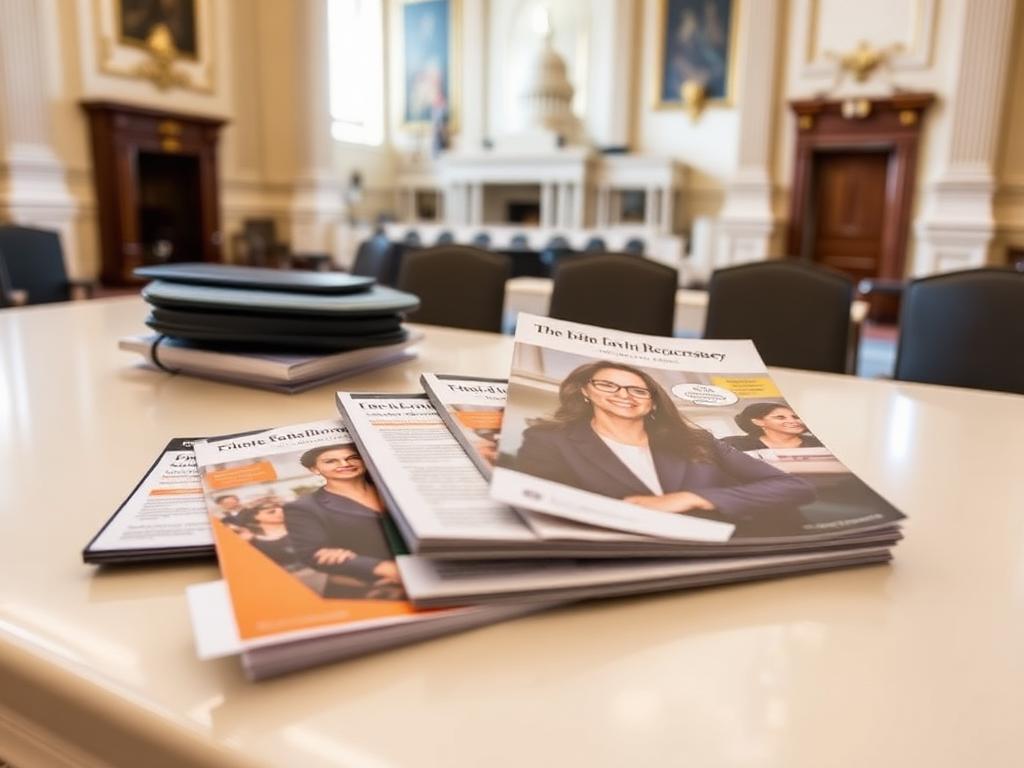
PrintCover Design
A cover built to signal leadership — restrained typography, a dignity-first portrait, and the identity applied with confidence.
 Editorial
Inside Spreads & Chapter Dividers
Magazine pacing: pull quotes, multi-column narrative, full-bleed photography, and oversized chapter numerals.
 Data Visualization
Impact & Financial Highlights
Program outcomes and financial stewardship visualized for comprehension at executive reading speed.
 Multi-Format
Print, Tablet & PDF Presentation
One editorial system performing across a printed copy, tablet reading, and the desktop PDF review experience.
Executive Letter
Leadership voice given editorial weight — portrait, signature, and a single-idea opening spread.
Editorial Design System
Typography hierarchy, grid, color usage, iconography, and photography treatment governing every page.
Organizational Highlights
Program impact, campaign results, and milestones sequenced as chapters rather than lists.
Closing Message
A closing spread that turns gratitude into momentum for the year ahead.
Leading the Work
My role was executive: setting the narrative, aligning stakeholders around it, and holding the quality and accessibility bar — not producing pages.
- Ownership
- Narrative, design, quality
- Executive Partners
- CEO, development, programs, finance
- Teams Led
- Design, editorial, production
- Deliverable
- Print, accessible PDF, digital
What changed
The outcome was organizational, not decorative: a stronger executive communications asset and a repeatable editorial standard.
- Enhanced visual storytelling across program, campaign, and financial content.
- Gave executives reusable language and visuals for board and donor conversations.
- Established accessibility as a baseline expectation for RAINN publications.
- Reduced the effort required to produce future reports by codifying the editorial system.
Behind the Work
In her own words
Reflecting on the work, the report clarified what organizational communications are actually for.
Editorial storytelling earns trust
A report that reads like a publication signals an organization that knows what it is doing. Format is a credibility signal.
Design supports transparency
Clear hierarchy and honest data visualization make financial and program information genuinely accessible — transparency is a design outcome, not just a disclosure.
Emotion and evidence need each other
Story without numbers feels unproven; numbers without story feel hollow. The balance is a structural decision made early, not a styling choice made late.
Decide the narrative before the layout
The hardest work was agreeing on the three things that mattered. Once that was settled, design moved quickly and reviews stopped looping.
Write for many rooms at once
Board members, donors, policymakers, and survivors read differently. Designing entry points for each is what made one publication work for all of them.
“An annual report should do more than summarize accomplishments. It should tell the story of an organization's impact in a way that builds trust, inspires confidence, and strengthens relationships with stakeholders.”
More executive case studies


Creative Operations Transformation
Rebuilt how creative work enters, moves through, and leaves the organization. Standardized intake, review, and governance turned an overloaded reactive team into a predictable, high-output creative function with measurable capacity gains.
View Case StudyLooking for creative leadership at this level?
I build creative organizations that produce measurable business impact.